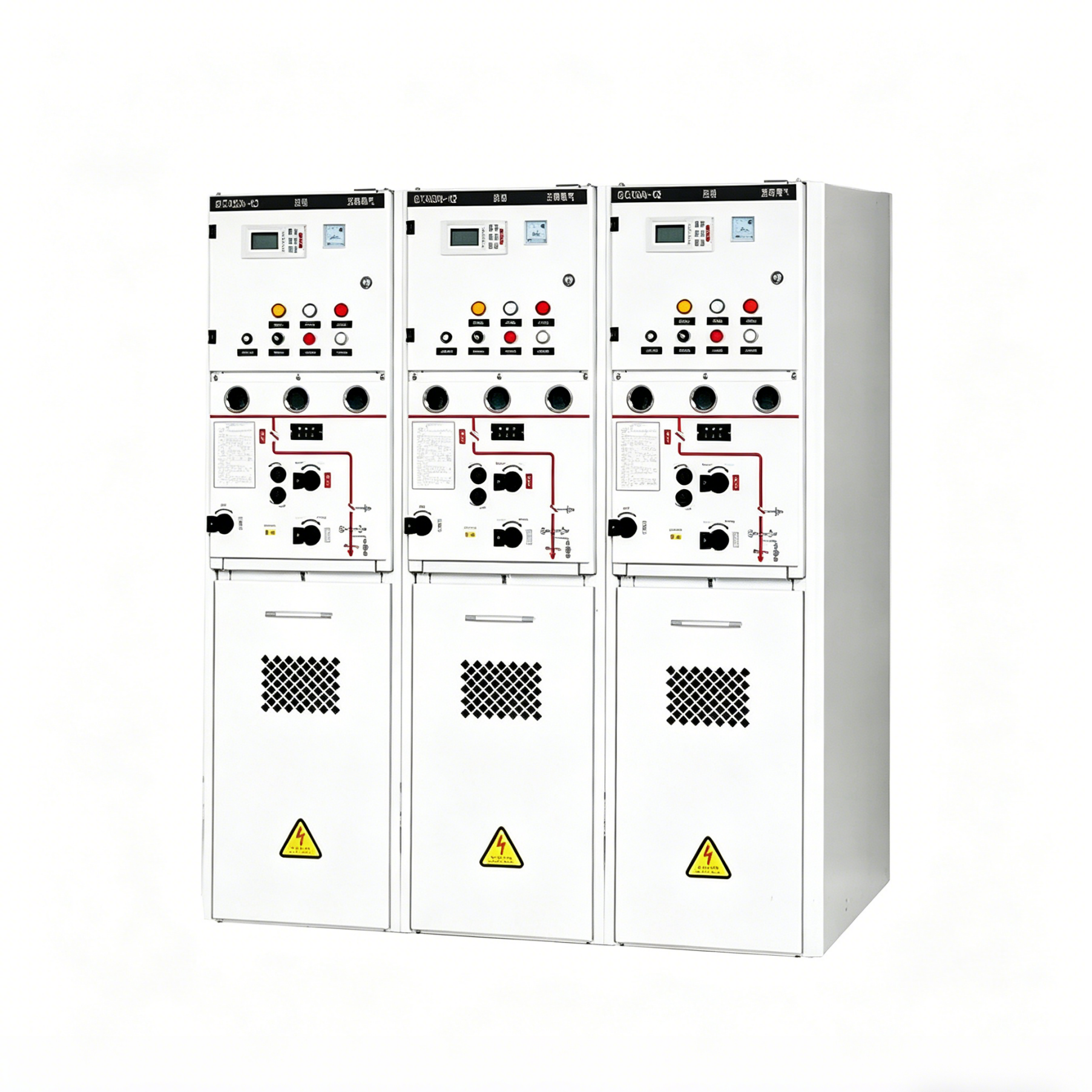
Three Insulation Types for Switchgear: Air, Gas, Solid – Which One to Choose?
Introduction
One of the core functions of switchgear is insulation – separating high-voltage live parts from the outside to ensure safety. But different insulation methods result in very different performance, size, cost, and applications.
The three most common insulation types on the market today are:
Air-insulated (AIS)
Gas-insulated (GIS, typically SF6)
Solid-insulated (SIS)
Many customers cannot tell the differences or know which type suits their project.
This article provides a comparison table, plus the pros, cons, and typical applications of each – to help you make a clear decision.
1️⃣ Core Differences Between the Three Insulation Types
Feature
️ Air-Insulated (AIS)
Gas-Insulated (GIS / SF6)
Solid-Insulated (SIS)
Insulation medium
Air
SF6 gas (or other eco-friendly gas)
Solid materials like epoxy resin
Structure
Exposed parts, large size
Fully sealed, compact
Fully sealed, small size
Typical voltage
10kV – 35kV
10kV – 500kV+
10kV – 35kV
Protection rating
IP3X–IP4X
IP67 (short-term submersion)
IP67
Environmental adaptability
Poor (sensitive to dust, moisture, salt fog)
Good (fully sealed)
Good (fully sealed)
Initial cost
Low
High
Medium
Maintenance need
High (regular insulator cleaning)
Low (maintenance-free)
Low (maintenance-free)
Service life
20–30 years
30+ years
25–30 years
Environmental friendliness
Good (no gas leakage risk)
Moderate (SF6 is a greenhouse gas)
Good (no gas)
2️⃣ Air-Insulated Switchgear (AIS): The Most Traditional and Economical Choice ️
One-line positioning: Uses air as the insulation medium – the most traditional and widely used type of switchgear.
Advantages:
Lowest cost, mature technology
Simple maintenance, readily available spare parts
No gas leakage risk, environmentally friendly
Disadvantages:
Large size, takes up significant space
High demands on installation environment (sensitive to dust, moisture, salt fog)
Relatively clean environments (no heavy dust or high humidity)
Small to medium projects with limited budget
✅ Best for: Projects with limited budget, a dedicated electrical room, and a clean environment.
3️⃣ Gas-Insulated Switchgear (GIS): Compact, Reliable, but Expensive
One-line positioning: Circuit breakers, disconnectors, and other components are fully sealed inside a stainless steel tank filled with SF6 gas – fully insulated.
Advantages:
Extremely small footprint (for the same voltage level, requires only 1/5–1/10 of the space of AIS)
Fully sealed – unaffected by environment (dust, moisture, salt fog)
Maintenance-free or very low maintenance
High reliability
Disadvantages:
High cost (large initial investment)
SF6 gas is a strong greenhouse gas – subject to strict environmental regulations
If leakage occurs, professional equipment is required to refill
Typical applications:
Urban substations (space-constrained)
Underground substations
Coastal or heavily polluted areas
Projects with extremely high reliability requirements
✅ Best for: Projects with very limited space, sufficient budget, and harsh environmental conditions.
Note: Eco-friendly gas-insulated switchgear (using dry air, N2, or fluoroketone mixtures) is now available as an alternative to SF6.
4️⃣ Solid-Insulated Switchgear (SIS): An Emerging Eco-Friendly Compact Solution
One-line positioning: High-voltage live parts are completely cast and encapsulated in solid materials such as epoxy resin – fully insulated.
Advantages:
Small size, compact structure
Fully sealed – unaffected by environment
No gas leakage risk – environmentally friendly
Maintenance-free
Disadvantages:
Relatively new technology – less market recognition than AIS and GIS
Difficult to repair if internal fault occurs (may need complete replacement)
Cost is higher than AIS but lower than GIS
Typical applications:
Indoor projects with high environmental requirements
Projects with strict environmental standards (unwilling to use SF6)
Projects needing compact size but with limited budget
✅ Best for: Projects requiring compact size and environmental friendliness, but with a budget lower than that needed for GIS.